

Applications of Nuclear Medicine in Cancer Diagnosis
Early Detection: One of the most significant advantages of nuclear medicine is its ability to detect cancer at an early stage. Traditional imaging techniques often struggle to identify small or early-stage tumors. Nuclear medicine, however, can reveal metabolic and molecular changes in tissues before structural changes become apparent.
PET Scans: PET scans are a common nuclear medicine technique used for cancer diagnosis. By injecting a radiopharmaceutical, such as FDG (fluorodeoxyglucose), which mimics glucose, into the body, doctors can identify areas of high metabolic activity, often indicating the presence of cancer cells.
Bone Scans: Nuclear medicine bone scans are used to detect the spread of cancer to the bones. By introducing a radiopharmaceutical that targets bone tissue, doctors can identify areas of increased bone activity, which may indicate cancer metastasis.
Applications of Nuclear Medicine in Cancer Treatment
Radioimmunotherapy: Radioimmunotherapy combines nuclear medicine with immunotherapy to target cancer cells more effectively. This approach uses radiolabeled antibodies that bind to specific proteins on cancer cells, delivering radiation directly to the tumor and enhancing the immune system’s ability to destroy cancer cells.
Theranostics: Theranostics is a cutting-edge field that combines therapy and diagnostics. In nuclear medicine, theranostics involves using the same radiopharmaceutical for both imaging and treatment. This approach allows doctors to visualize the tumor, assess its response to treatment, and adjust the therapy accordingly.
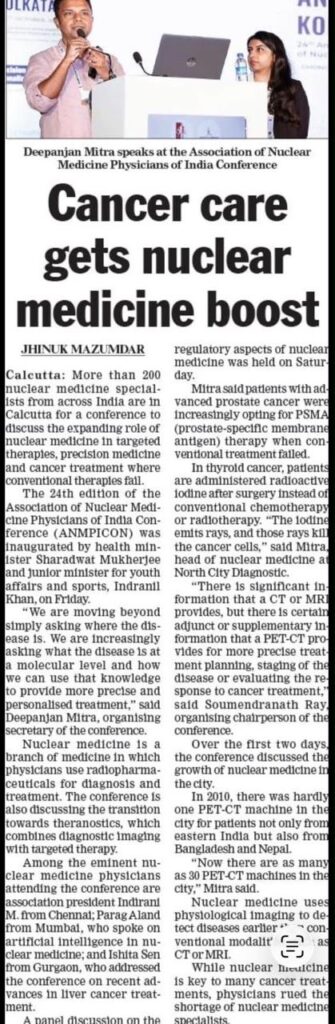
Ref. by J Mazumdar · 2026 — Title: Cancer care gets nuclear medicine boost ; Authors: Jhinuk Mazumdar